
Flaxseed Oil: Does it Raise Estrogen?
01.14.2015For years I’ve been hearing people say that flaxseed oil should be avoided because it can “raise estrogen levels” and “cause gynecomastia”. For those who are unfamiliar, flax oil is extracted by pressing flaxseeds. Although it is well known that flaxseeds contain lignans, it is not entirely clear what role lignans have on the human body. Lignans are polyphenols found in the hulls of flaxseeds and many claim that when ingested, lignans will exert estrogenic effects on the body. Is this true? Don’t know. Although it is clear that phytoestrogens (estrogen like chemicals found in plants) such as lignans do resemble estrogen and can effectively occupy the estrogen receptor, the activity that takes place thereafter isn’t completely understood. Just because it looks like estrogen and can occupy the place of estrogen at the receptor doesn’t necessarily mean it will exert the same activity as estrogen. Consider the drug Tamoxifen; a synthetic ESTROGEN used to treat breast cancer via its ability to occupy the estrogen receptor site without exerting estrogenic activity all while blocking viable estrogen molecules from doing their job. After all, Tamoxifen looks just like estrogen but doesn’t act like it and blocks estrogen from exerting its influence. Can lignans and other sources of phytoestrogens act in a similar way? Who knows?! Not me.
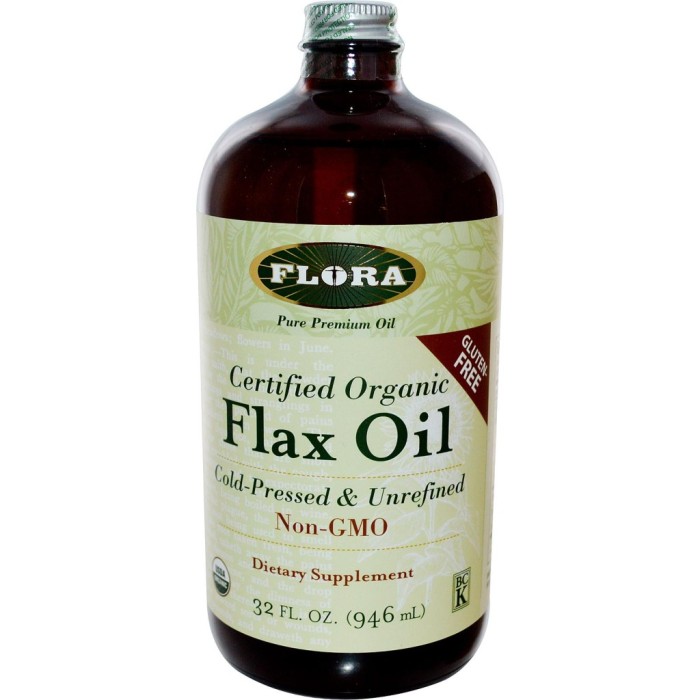
What I DO know is that pure flax oil doesn’t even contain lignans! So even if lignans do act like estrogen in the body, the oil (SO LONG AS IT DOES NOT CONTAIN ADDED LIGNANS!) should be clear of all lignans anyways! As mentioned earlier, lignans are found in the hulls of flaxseeds. Under normal circumstances, the hulls and all other particles are removed during the filtration process. If you look at popular brands of flax oil, you will see that many are labeled simply as flax oil or flaxseed oil while some clearly specify that they contain lignans. Several of the most popular brands like Flora/Udo’ and Barlean’s offer regular flaxseed oils as well as versions containing lignans. Be sure to read the labels thoroughly to identify which type of product you are looking at. My advice would be to avoid the oils containing lignans until the subject is better understood. As for the flaxseed oils that don’t contain lignans, there should be nothing to worry about in the way of estrogenic activity. So, if you like flaxseed oil and feel that it is a sensible way to add more omega-3 fats to your diet then I don’t see any reason to avoid it.





Discuss on our forums
Continue the discussion on our forum →